
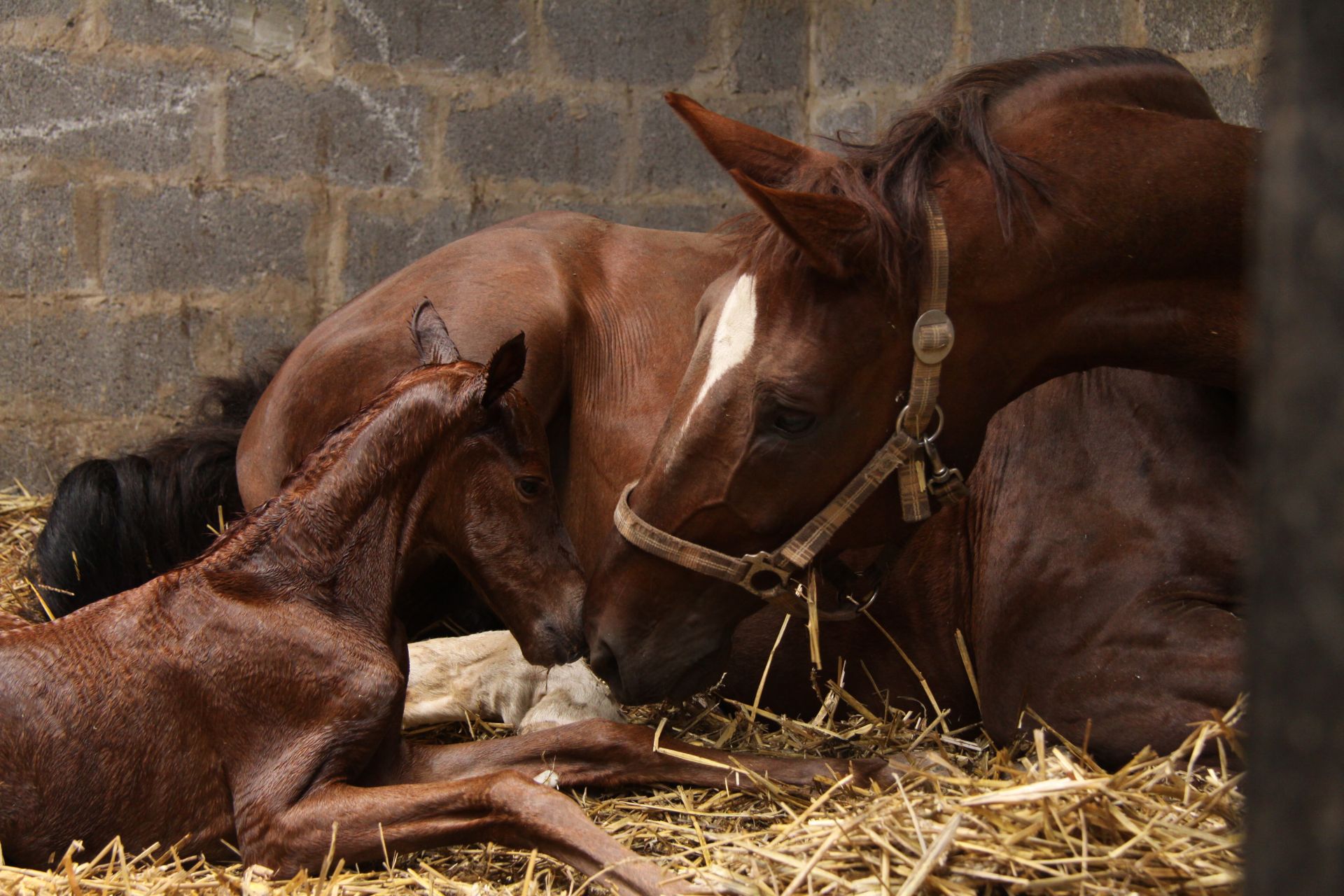
The arrival of the foal
Jeudi 12 Février 2026The birth of a foal is an exciting and crucial moment in the equestrian world. It marks the beginning of a cycle that directly influences the quality of future racehorses, training horses, or competition horses. However, it is also a delicate process that requires attention and care at every stage, from gestation to growth and weaning. The foal’s health is closely linked to the care the mare receives during pregnancy, the management of the birth, the nursing process, and the introduction of solid food. In this blog, we will focus on the care of newborn foals.
At GIROVET, we understand how important the first hours and days of a foal’s life are. For this reason, we offer a wide range of syringes to aid in their care and address any potential issues that may arise: Coloboost (colostrum), Horsyboost (stimulant for the first days), FortiBoost (fortifier for delayed foals), and FloryBoost (intestinal flora support).
At GIROVET, we understand how important the first hours and days of a foal’s life are. For this reason, we offer a wide range of syringes to aid in their care and address any potential issues that may arise: Coloboost (colostrum), Horsyboost (stimulant for the first days), FortiBoost (fortifier for delayed foals), and FloryBoost (intestinal flora support).
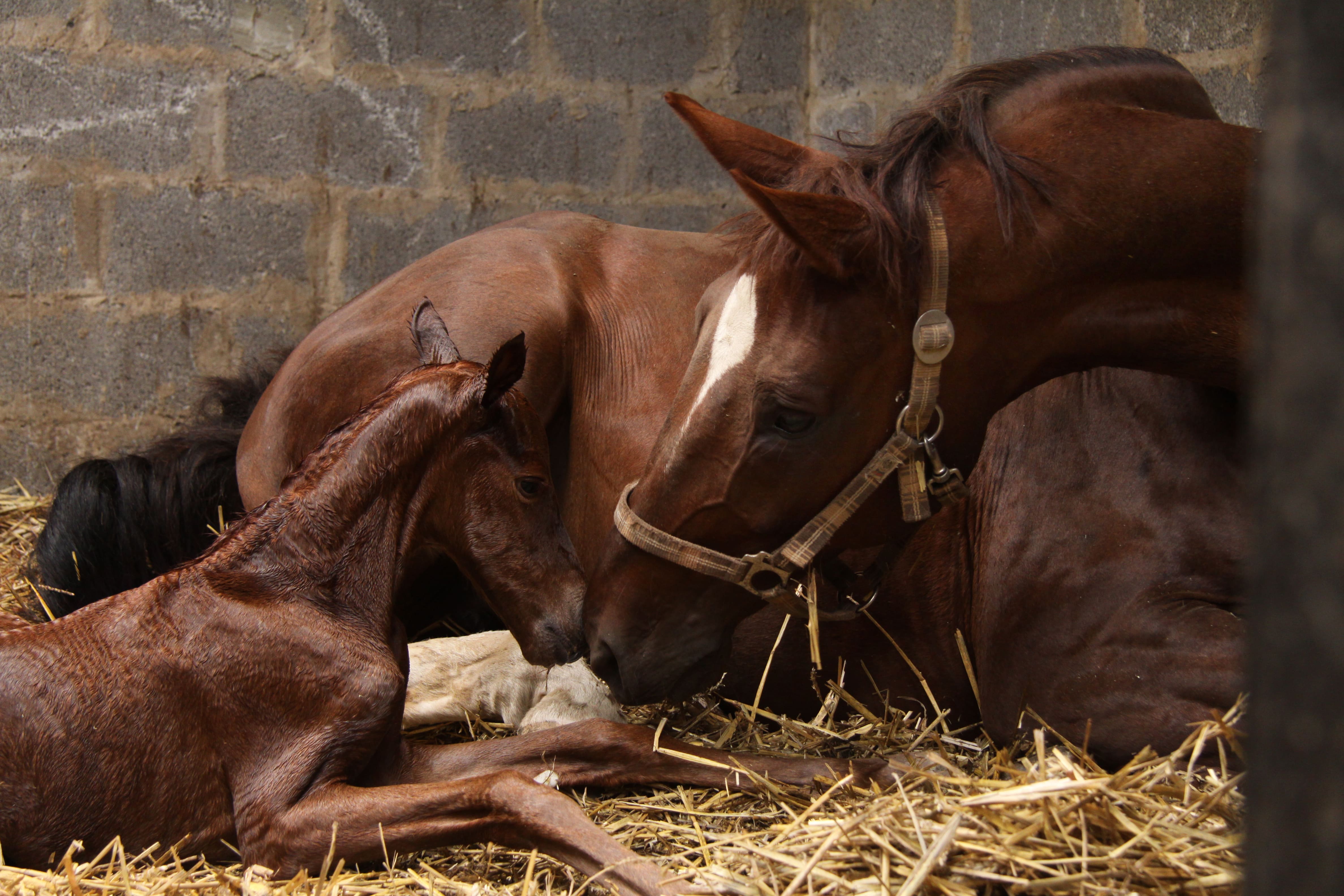
Once the foal is born, the mother will lick it, make contact, and carry out imprinting—a recognition by smell that is essential for the mare to allow the foal to nurse. Within 5-10 minutes, the foal should have a sucking reflex, even if it has not yet stood up. The umbilical cord should break naturally. The mare will clean the foal, but it is necessary to ensure that the umbilical cord remains intact and does not cause infections. The foal should start moving shortly after birth. If it does not stand up by itself within a maximum of 2 hours, this may indicate a problem. Newborn foals are sensitive to temperature changes, so it is vital to keep them warm and dry, especially if they are born in cold or damp conditions.
It is essential that the foal consumes colostrum from its mother within the first few hours of life. Colostrum is rich in antibodies and nutrients, which are crucial for strengthening the foal’s immune system.

Colostrum is the first milk the mare secretes immediately after birth and only for the first 24 hours. It is thick, yellowish, and noticeably different from the regular milk that will be produced later. This substance is critical for the foal’s health because it contains immunoglobulins (antibodies) that the foal cannot produce on its own. These antibodies help the foal defend itself against diseases and infections during its first few weeks of life. The foal must ingest colostrum within the first 6 hours, as after this period, its ability to absorb these antibodies decreases significantly.
If the foal does not receive enough antibodies from the mare through colostrum, it experiences what is known as Failure of Passive Transfer (FPT). This can happen for several reasons:
- Insufficient colostrum production: if the mare does not produce enough colostrum or if the quality is poor (low antibody content), the foal will not receive adequate protection. This can be due to the mare’s health issues or a difficult birth.
- Nursing problems: if the foal cannot nurse properly in the first hours after birth, it will not consume the necessary amount of colostrum. This may be due to foal weakness, poor positioning of the mare, or even mastitis, which hinders milk flow.
- Intestinal absorption issues: the foal must be able to absorb the colostrum’s antibodies through the small intestine, a process that is most efficient in the first hours of life. If the foal has digestive problems or intestinal malformations, it may not absorb antibodies effectively.
Given the importance of colostrum, it is always advisable to be prepared with a colostrum supply (colostrum syringes are available for these cases) in case of any issues, ensuring the foal receives the colostrum it needs.
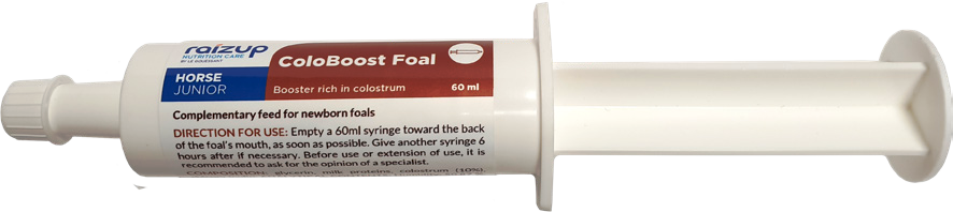
COLOBOOST
A full syringe of COLOBOOST (complete colostrum) can be administered within the first 6 hours of life, with another dose given at 12 hours if necessary. The dosage can be repeated up to 24 hours, but after this period, the foal’s ability to absorb immunoglobulins decreases, and it must start drinking regular milk.
Once we have ensured that the newborn has no abnormalities and have disinfected the umbilical cord, we should allow the mare to bond with her foal. However, we must monitor key aspects: The foal should stand up. The foal should urinate and pass meconium (first stool) within three hours. A veterinarian should examine the foal within the first 12 hours of life. The first few days are a high-risk period, so close monitoring is necessary. If the foal is weak, small, or underweight, it is recommended to administer a fortifier and stimulant containing glucose, vitamins, iron, and other energy sources to provide immediate strength.
If the foal remains weak after 24 hours, an energy-boosting supplement containing glucose, vitamins, iron, and other nutrients should be given to help it gain strength.
If the foal remains weak after 24 hours, an energy-boosting supplement containing glucose, vitamins, iron, and other nutrients should be given to help it gain strength.
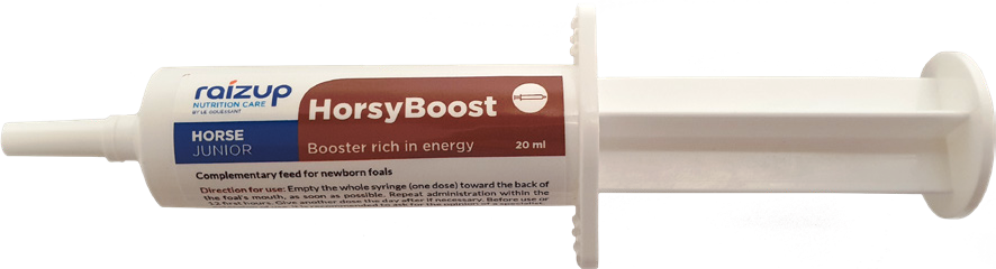
HORSYBOOST
A stimulant and fortifier that provides instant energy to weak newborn foals.
After the neonatal period, some foals may still require extra support if they are small or underdeveloped.
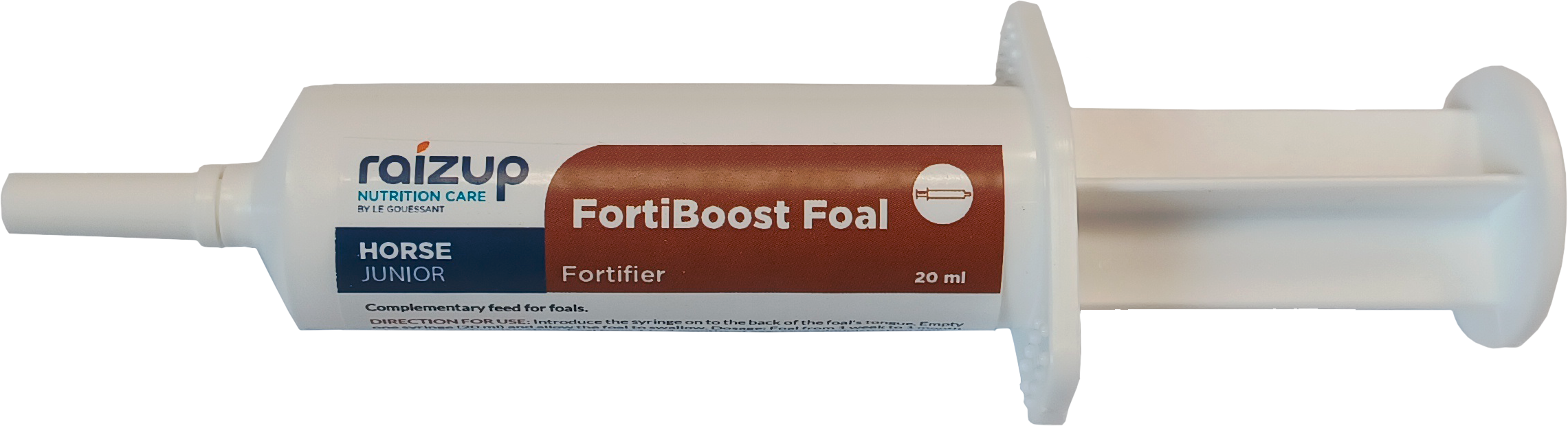
FORTIBOOST
A formula that strengthens and enhances foal growth.
A full syringe should be administered once per week until it is no longer needed.
We also offer powdered mare’s milk replacement for foals in case the mare is absent, ill, or refuses to nurse the foal.

EXTRA FOAL
EXTRA FOAL complements or replaces maternal milk in the newborn foal’s diet, increasing energy intake for weak foals.
