
Cushing's syndrome. What is it and how to treat it?
Friday 10 July 2026
Cushing's syndrome.
What is it and how to treat it?
Cushing's syndrome, also known as Pars Intermediate Pituitary Dysfunction (PIPD) is a common condition in older equines and can affect approximately 20% of horses and ponies over the age of 15. As knowledge increases, more cases are diagnosed. What might once have been considered just a sign of aging is now often recognized as a symptom of Cushing's.
But what is happening to a horse with Cushing?
Cushing's syndrome is an endocrine disorder caused by hyperplasia (enlargement) of the middle part of the pituitary gland. This gland is located at the base of the brain, and in its normal state allows the release and inhibition of hormones. In horses with PIPD, inhibitory processes are reduced, causing excessive levels of hormones to be released which, in turn, causes the adrenal glands to secrete more cortisol. Cortisol (known as stress hormone) is the cause of the symptoms. These hormones control the desire of food and water, shedding and even the health of the muscles, so when these are unbalanced, we see considerable changes in the normal functions of the body of our horses. Ponies are affected more frequently than horses, although no breed or sex bias has yet been found.
Symptoms
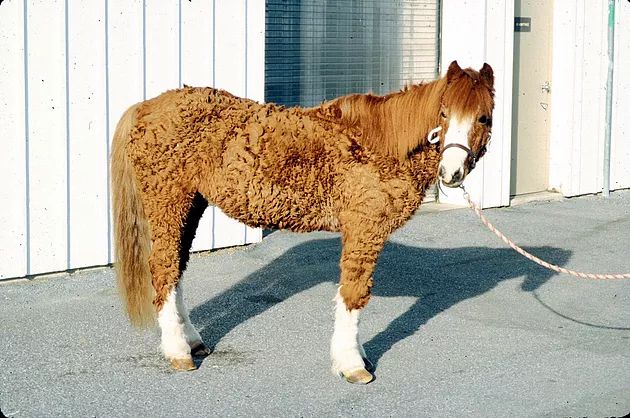
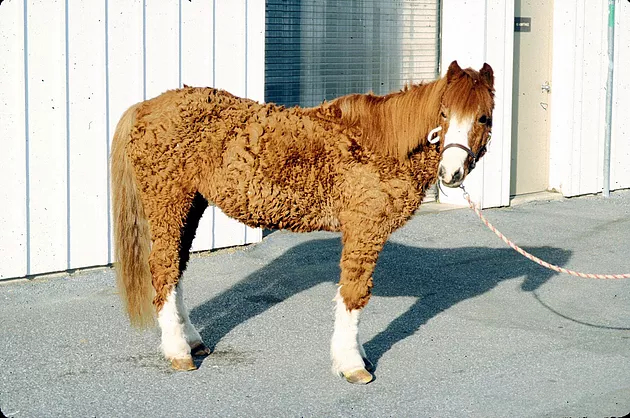
The most consistent and obvious clinical sign is hirsutism: the presence of abnormally long and curly fur. It is usually preceded by years of late shedding of the winter coat.
Laminitis is other of the most well-known and worrying signs, and recurrent laminitis is increasingly considered to be "pre-Cushing". It is estimated than more than 80% of the horses with laminitis suffer from the disease as a result of a hormonal abnormality, most commonly PIPD.
Other symptoms include excessive sweating, excessive water drinking and subsequent frequent urination, as well as lethargy, weight-loss, loss of muscle mass and poor performance.
Additionally, there may be an abnormal distribution of fat, resulting in fat pads or neck ridges. Even with restricted diets, the supraorbital cavity over the eye is often seen as it begins to bulge due to fat deposition.
Severely affected horses may have reduced immunity and are prone to recurrent infections, such as foot abscesses, tooth root abscesses, and other secondary infections. They may also take longer to heal from problems such as minor wounds and may develop liver disease.
Diagnosis
The diagnosis made by the veterinarian will be based on a number of factors, including your horse's medical history, as well as a blood test to determine hormone levels in the blood. Its diagnosis is not always easy, since hormonal production varies depending on the season and there can be many false negatives when the disease is in its initial stage. In these cases, clinical observations and owner reports can be of great help.
Treatment
Once diagnosed, is necessary to work with the veterinarian in the management, and it is advisable to search for qualified nutritionists to ensure an adequate diet. Both the general diet and the specific nutrition must be suitable for your horse or pony.
In most cases, excellent control can be achieved with treatment with Pergolide along with lifelong routine care that includes an appropriate program of deworming, dental care, foot care and vaccines.
Question: The veterinarian is treating my elderly pony with pertgolide. I would like to administer Cushinaze to him as well, can I do it? Will it go well?
Answer: It's fine to ask to be sure. We are glad to report that Cushinaze works very well and safely together with pergolide. Cushinaze is a supplement that offers support to areas such as metabolic health, coat condition and mental acuity, and owners can see the difference for themselves after administering just one can.
More information
Your experiences:
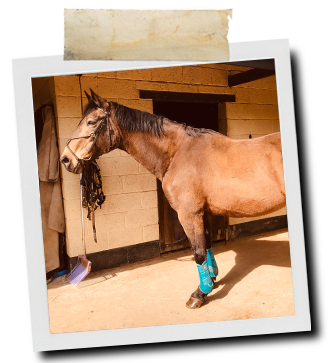
Jo Howse and May:
"May is now 26 years old and the last year I noticed that she didn't look as good as usual. She seemed to age very quickly and her coat was greasy and dull, so I decided to try Cushinaze to help her with the aging process. The difference has been stunning. Her coat looks fabulous, his body shaped has improved and looks more like her old self, and she certainly has a perkier step again."
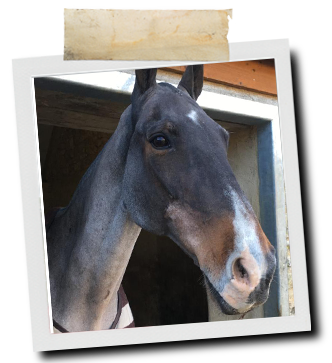
Angie and Rocky:
"At age 29, Rocky began having difficulties maintaining weight and seemed a bit apathetic. After using Cushinaze, he has become enthusiastic again and he is recovering some condition."
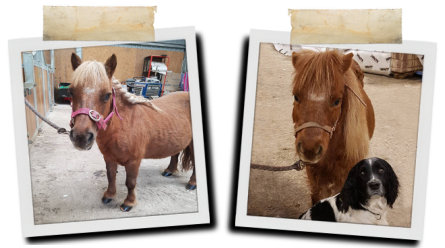
Emily and Minnie
"We have had Minnie for about 5 years. We rescued her, so we don't know how old she is. Her skin and coat have always been in poor condition and she has never properly shed her hair during the summer. She is also quite slow and, in general, has a hard time with everything like a real old woman. Since she started with Cushinaze, I'm honestly amazed at the difference! She is like a new pony. Her fur has shed and is not curly like before. The farrier said she is lifting her legs better and her feet are in good condition. And tonight galloped across the field to come to dinner! The last time she galloped was about 4 years ago!
I can't thank you enough for recommending this product to me.
My naughty little redhead pony is back!
Thank you again!
emily xx
PD: The first photo is from now, and the second is from about a month before I started Cushinaze. It doesn't show up very well, but it does show off its curly fur at the front.
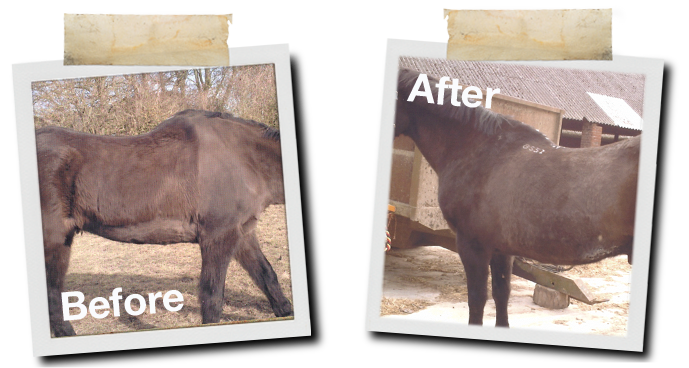
Tico:
Pic 1: Trial Horse 1, pictured immediately prior to the start of the trial.
Pic 2: Trial Horse 1, showing the improvement in Body Condition and Coat Condition following Equine Cushings Syndrome supplement trial.
