
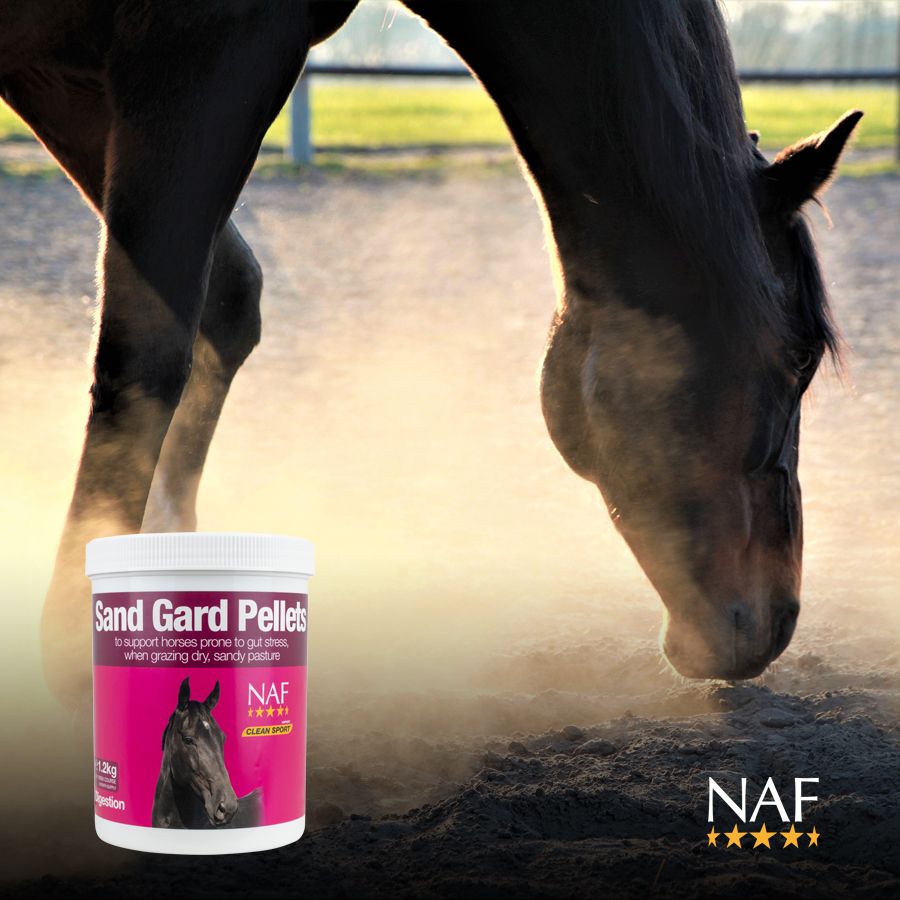
Sand colics
Wednesday 09 September 2020When grazing on dry, dusty, or sandy soils, especially in the summer, horses can ingest large amounts of sand. If sand or dirt accumulates in the intestine, it can cause lesions and create digestive discomfort, with the risk of sand colic.
Is my horse at risk?
- If the horse is paddocked or fed on the ground, they may ingest a large amount of sand, either out of boredom or hunger.
- If the horse is in areas with little grass or sandy terrain, such as beaches, dunes, etc., you may be ingesting a large amount of sand or dirt by squeezing the grass shoots.
- Forages and feedstuffs are dirty or have a lot of dust and sand.
- If the horse suffers from any nutritional deficiencies, it can seek dirt or sand voluntarily.
What can we do to prevent it?
As in many cases, prevention is key. We must take into account two factors: handling and feeding.
As in many cases, prevention is key. We must take into account two factors: handling and feeding.
- Management: it is best to feed horses in a feeding trough, bucket, or on some base, but not on the ground. It is also advisable to put some objects that can entertain them so that they do not end up eating sand out of boredom.
- Feeding: it is important that the horse has a balanced diet, quality feed and forage, and is clean and free of sand. It is also recommended that they have free access to a salt rock. And, of course, always guarantee free access to fresh and clean water.
In cases of sand ingestion or in horses that have already had sand colic or other problems for this reason, it is advisable to supplement the diet with Psyllium.
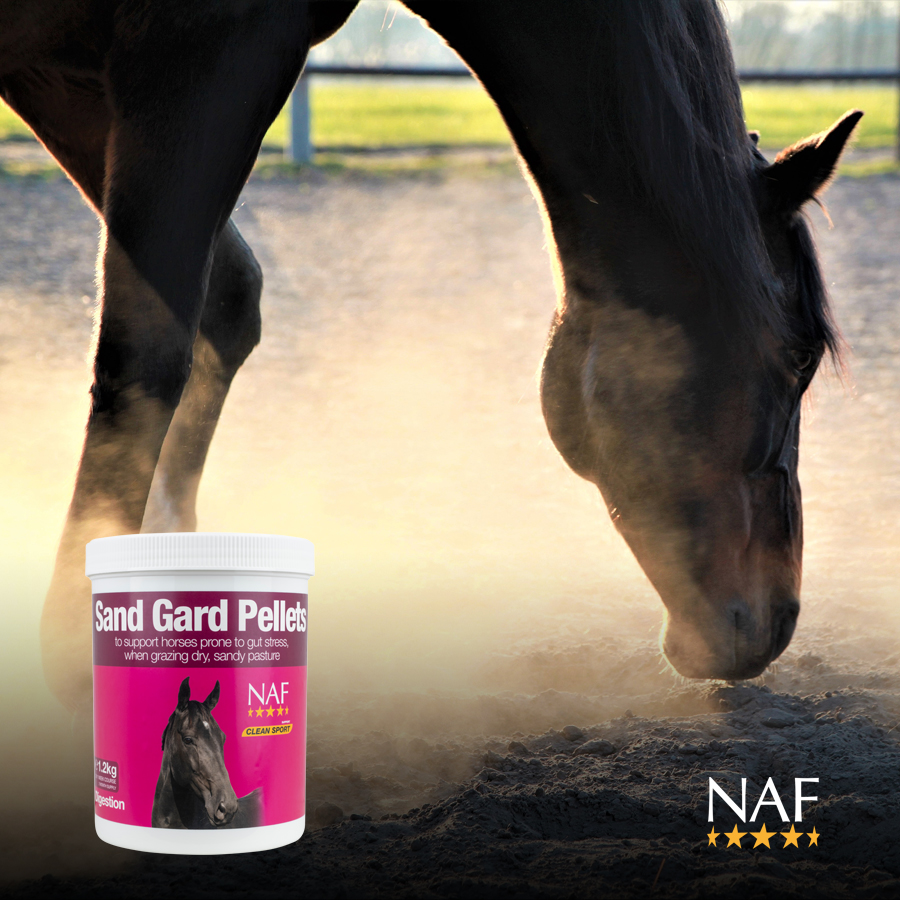
SAND GARD contains PSYLLIUM, also known as Plantago Ovata, which facilitates the natural elimination of sand accumulated in the intestine. It also provides probiotics to promote intestinal flora. Now in pellets, which are very easy to administer and have an appetizing flavor.
