

The mare, the foal and the stallion: taking care of the protagonists
Thursday 07 February 2019
In order for breeding to be a success, we must dedicate a good time to each phase, analyzing the needs at each stage of the mare, stallion or foal. Success is not the result of chance.
THE MARE
Breeding mares are the engine of the equine industry. They are often required to provide one foal each year, which requires a lot of work and care. Proper nutrition is considered one of the most important factors for successful breeding. Specialized care, taking into account breed, age, gestation status and nutrient quality is essential.
The normal gestation of the mare lasts about 11 months, the first six being the slowest growth of the foal. In fact, up to the seventh month it only occupies 2% of the mother's body weight and has 20% of the foal's weight at birth. Thus, the nutritional requirements of the mare do not differ much from those of an adult horse in maintenance. It is of great importance not to overfeed the mare during this period to avoid overweight at the time of giving birth.
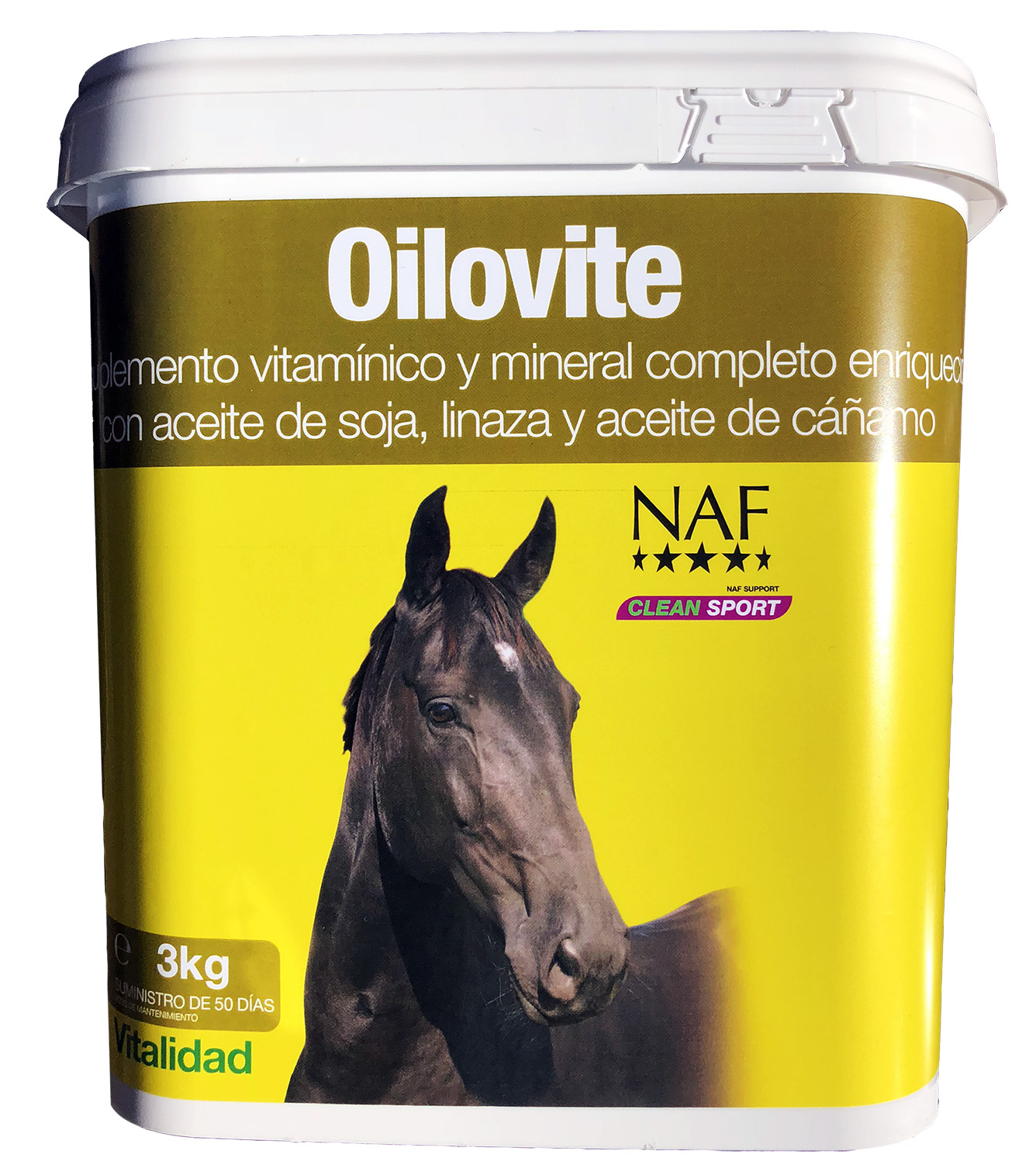
OILOVITE
Supplement that compensates for nutritional deficiencies by providing multivitamins, minerals, oligoelements, aminoacids...
Advanced gestation corresponds to the last trimester and goes from 7 months to birth, where the growth of the foal increases exponentially from 20% to 100%. The mother's energy needs only increase by 15%, but protein and mineral requirements increase the most. This is a concept that must be very clear, since the mare should not be overfed in terms of energy by giving more ration of hay or grain, but alternatives capable of balancing the mineral and protein contents must be sought.
Other minerals such as iron, zinc, copper or manganese are also important at this stage of gestation, since the foal is capable of storing them for use in the first months of life. In addition, they help to prevent developmental problems.
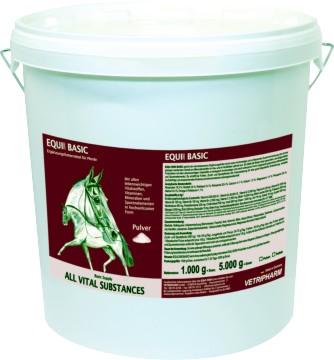
EQUI 2000 BASIC
Contains all essential vital substances highly bioavailable. The complete and effective combination balances the shortage of micronutrients in hay and concentrates. Indicated for developing foals, in stallions to improve mating and in mares as an important supplement during pregnancy and lactation.
Administering 100g/day provides, in addition to vitamins, iron, iodine, cobalt, copper, manganese, zinc and selenium.
At the beginning of lactation the energy demands of the mare are very high, since she produces daily an amount of milk equivalent to 2% and 3% of its body weight, and this milk is very rich in energy, proteins, calcium, phosphorus and vitamins, reserves of the mare. It is advisable to start feeding with grain in the last weeks of pregnancy, in addition to giving a boost in protein, calcium and phosphorus, such as Equi 2000 Basic. All of this will increase the energy intake that the mare receives.
Therefore, it is recommended that all mares have nutritional control from the beginning of the reproductive season, which will ensure adequate body condition in each phase and that the foals receive all the nutrients they need to grow healthy and properly.
Therefore, it is recommended that all mares have nutritional control from the beginning of the reproductive season, which will ensure adequate body condition in each phase and that the foals receive all the nutrients they need to grow healthy and properly.

FERTILITY
Infertility in mares is a problem that exists even in the best studs. It is a problem that obey many causes, including infectious, anatomical, immunological or nutritional imbalances. A congenital defect often has no solution, but a drop in fertility due to poor nutrition is a problem to be solved, improving the quality of the diet and administering the ration and type of forage that the mare needs at all times.
There are substances and nutrients that are basic in the diet of a breeding mare:
- Beta-carotene:
It is a natural pigment available in many plants eating by horses in pasture, and acts as a precursor to vitamin A and as an antioxidant. In addition, it has been shown that improves immunity and be beneficial for reproduction. Beta-carotene passes from mother to foal through colostrum, so it is also beneficial for a newborn's defenses.
The confinement of horses and the way of life to which many of them are exposed can cause a deficiency of vitamins and minerals, and beta-carotene is usually one of them. The deficiency of these vitamin can cause a quiet heat, delayed ovulation, poor conception and even abortion in mares, while in stallions it causes poor sperm quality. Supplementing mares with this ingredient improves heat detection, increases conception rates and reduces embryonic mortality.
The confinement of horses and the way of life to which many of them are exposed can cause a deficiency of vitamins and minerals, and beta-carotene is usually one of them. The deficiency of these vitamin can cause a quiet heat, delayed ovulation, poor conception and even abortion in mares, while in stallions it causes poor sperm quality. Supplementing mares with this ingredient improves heat detection, increases conception rates and reduces embryonic mortality.
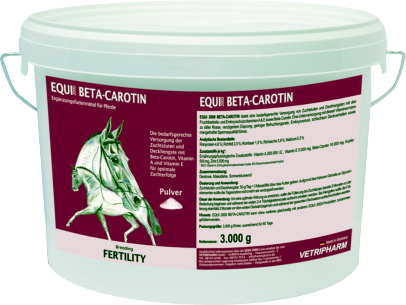
EQUI 2000 BETA-CAROTIN
Provides a full supply of vitamins A and E and beta-carotene. It has a high importance in fertility and reproduction in mares and stallions. A high level of beta-carotene in colostrum improves the foal's immunity and the fertility of the mare.
- Essential aminoacids:
Lysine and methionine are both essential aminoacids, meaning they cannot be synthesized by the body, and limiting,meaning that if you do not have enough lysine and methionine, the body cannot synthesize protein. They are necessary for horses of all ages, but especially for pregnand and lactating mares and growing foals.
- Calcium:
It is a micromineral of great importance for almost all the organs and systems of the body's horse, and its functions are well known. Calcium requirements increase in pregnant and lactating mares, in growing foals or in horses subjected to intense exercise.
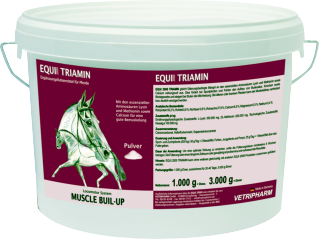
EQUI 2000 TRIAMIN
Provides a full supply of vitamins A and E and beta-carotene. It has a high importance in fertility and reproduction in mares and stallions. A high level of beta-carotene in the colostrum improves the foal's immunity and the fertility of the mare.
THE STALLION
The stallion contributes half of the genetic information, therefore, its defects can be passed on to its offspring. There is no point in breeding a stallion that has poor quality semen because the result will be frustrating and expensive.

- Semen analysis:
It is analyzed on successive days to find out its quality and to find out how much semen a stallion can produce. In a laboratory, the color is investigated to rule out that it contains substances that can damage spermatozoa, such as urine or blood; the morphology of spermatozoa, whether it is normal or defective; motility as a very important and necessary aspect to achieve fertilization, and spermatozoa concentration per dose, as a direct fertility factor.
- Improve sperm quality nutritionally:
A breeding stallion has a unique role in the world of breeding, as he is able to combine his riding work with his reproductive tasks. There are many important aspects when choosing a good stallion; not only beauty and good condition make an excellent stallion, but he must also be able to provide his services as a reproducer, and have semen capable of fertilizing the mare.
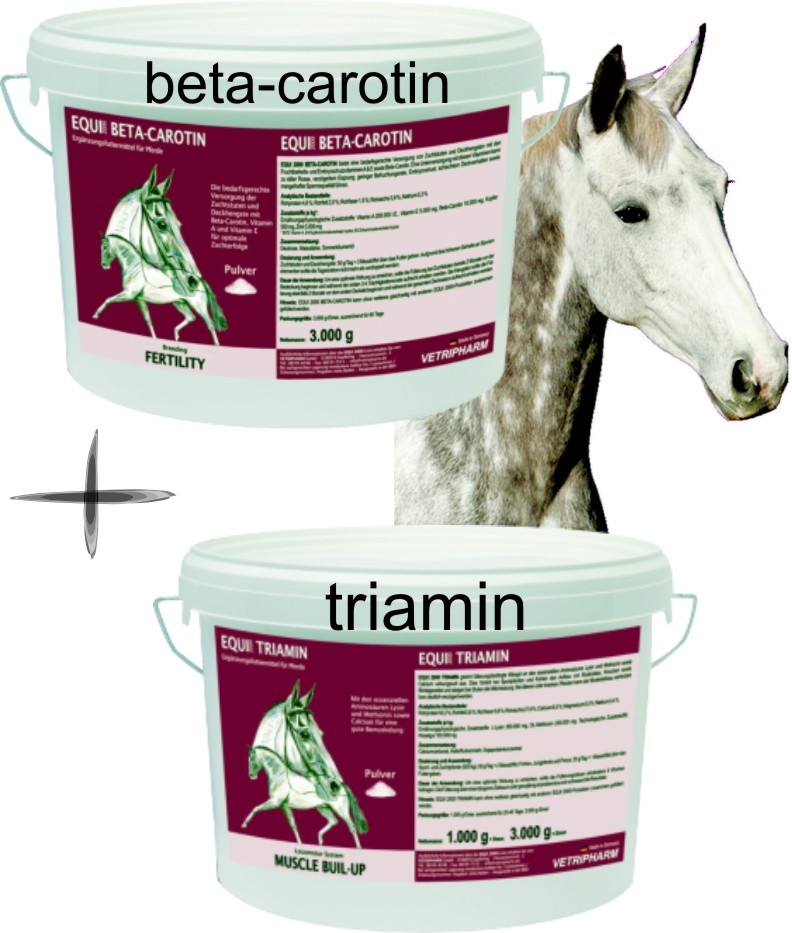
BETA-CAROTIN + TRIAMIN
The combination of this products ensures better sperm quality, more sexual appetite and increases libido in the stallion.
- The semen:
The semen is analyzed to determine its quality. It is very rich in omega 3 and omega 6 fatty acids, very important nutrients for fertility, motility and sperm morphology. A daily diet based on forage only contains between 2% and 3% of these fatty acids. Numerous studies suggest that supplementing with fatty acids improves motility, increases sperm concentration and the number of live sperm, all leading to greater reproductive success.
Supplementation with omega 3 can be especially effective in stallions with poor sperm quality or that produce semen with poor resistance to refrigeration or freezing.
It also has been shown that mares pass the omega 3 they ingest with their diet to their foals through milk, improving their immunity with the first intakes.
Supplementation with omega 3 can be especially effective in stallions with poor sperm quality or that produce semen with poor resistance to refrigeration or freezing.
It also has been shown that mares pass the omega 3 they ingest with their diet to their foals through milk, improving their immunity with the first intakes.
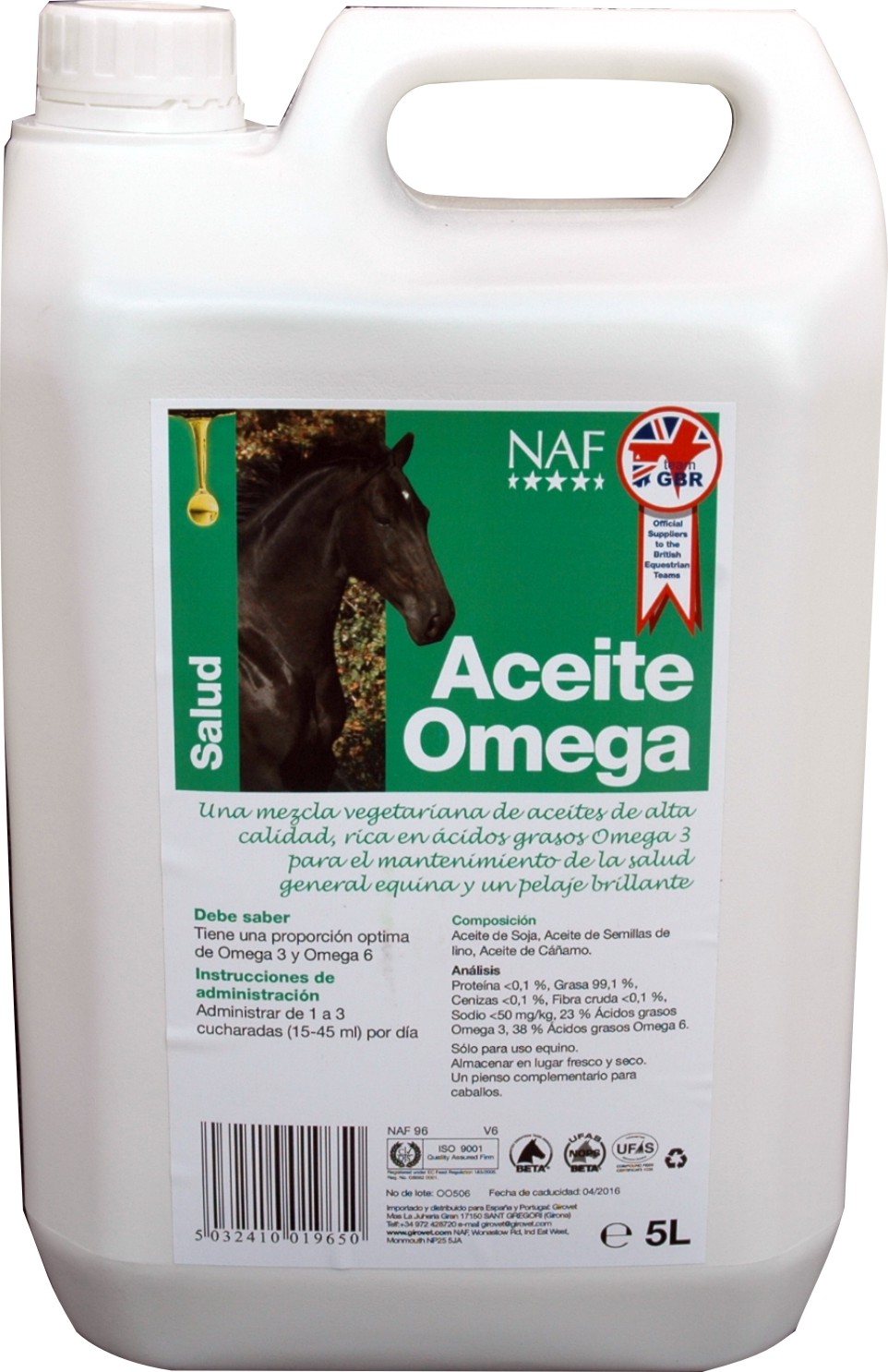
OMEGA OIL
Mixture rich in omega 3 and omega 6, specially designed to supplement breeding horses.
THE FOAL
The result sought in every stud is the foal, for this reason, after giving birth all eyes are focused on him to achieve a healthy growth and that one day he will become an athlete, or can provide a possible athlete.
- The colostrum:
Colostrum can mean the difference between life or death, since a newborn has a well-developed immune system but does not have any antibodies circulating in the blood that can fight off an infectious agent.
Colostrum is produced by the mother during pregnancy and is the first milk that she secretes just before giving birth and no later than 24 hours. Is thick, yellowish and clearly different from normal milk that she will synthesize later. Colostrum is rich in immunoglobulins, which the mare's mammary gland has separated from the bloodstream to pass on to her foal. It will be useful to him as first protection against invading organisms until his own immune system can do it, more or less at 10 weeks of age.
It is essential that the foal take the colostrum between 12 and 24 postpartum, since it is only then that his digestive system can absorb the immunoglobulins.
Passive transfer failure is called when a foal has not been able to absorb colostrum in the adequate period for different reasons: maternal colostrum is insufficient in quality or quantity, the foal has no instinct to suckle, the mare has mastitis, births with complications, weak mares... The best option is to provide colostrum artificially.
Colostrum is produced by the mother during pregnancy and is the first milk that she secretes just before giving birth and no later than 24 hours. Is thick, yellowish and clearly different from normal milk that she will synthesize later. Colostrum is rich in immunoglobulins, which the mare's mammary gland has separated from the bloodstream to pass on to her foal. It will be useful to him as first protection against invading organisms until his own immune system can do it, more or less at 10 weeks of age.
It is essential that the foal take the colostrum between 12 and 24 postpartum, since it is only then that his digestive system can absorb the immunoglobulins.
Passive transfer failure is called when a foal has not been able to absorb colostrum in the adequate period for different reasons: maternal colostrum is insufficient in quality or quantity, the foal has no instinct to suckle, the mare has mastitis, births with complications, weak mares... The best option is to provide colostrum artificially.

COLOBOOST
A full syringe of COLOBOOST can be administered during the first six hours of life and repeated with another 12 hours after birth. It could be repeated if considered necessary up to 24 hours of life, since after this period the absorption capacity of immunoglobulins decreases and the foal should already drink milk.
If after 24 hours the foal is weak, is recommended to administer a fortifier formulated with glucose, vitamins, iron and other sources of energy able to providing instant energy to start life.
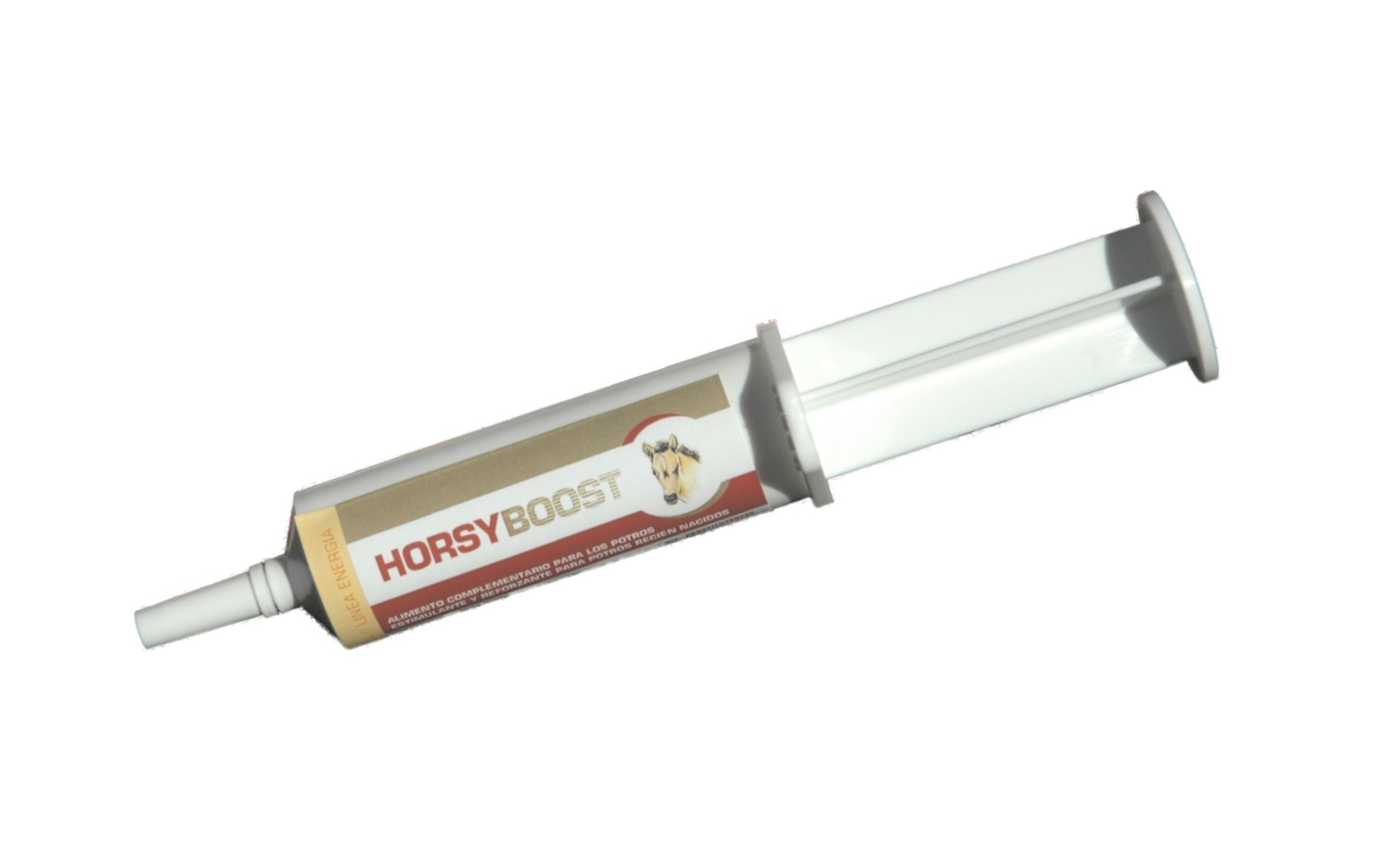
HORSYBOOST
Stimulating and reinforcing that provides instant energy to the weak newborn foal.
Once the neonatal period has passed, and the risk appears to has passed, some foals still need a booster if they remain small or have a slow growing.
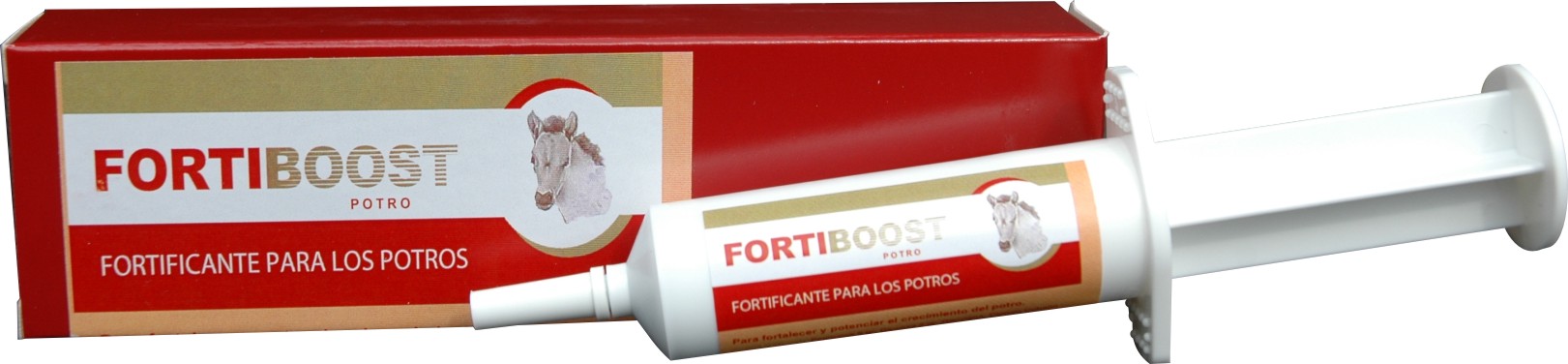
FORTIBOOST
Strengthens and enhances the foal's growth.
One full syringe should be administered once a week until considered necessary.
In short, a good nutrition can prevent a lot of reproductive problems in a stud whose ultimate goal is good business results.
The mare, the stallion and the foal are three essential pieces that need to be evaluated separately to reach the final goal together.
The mare, the stallion and the foal are three essential pieces that need to be evaluated separately to reach the final goal together.
