
West Nile Virus
Tuesday 31 May 2022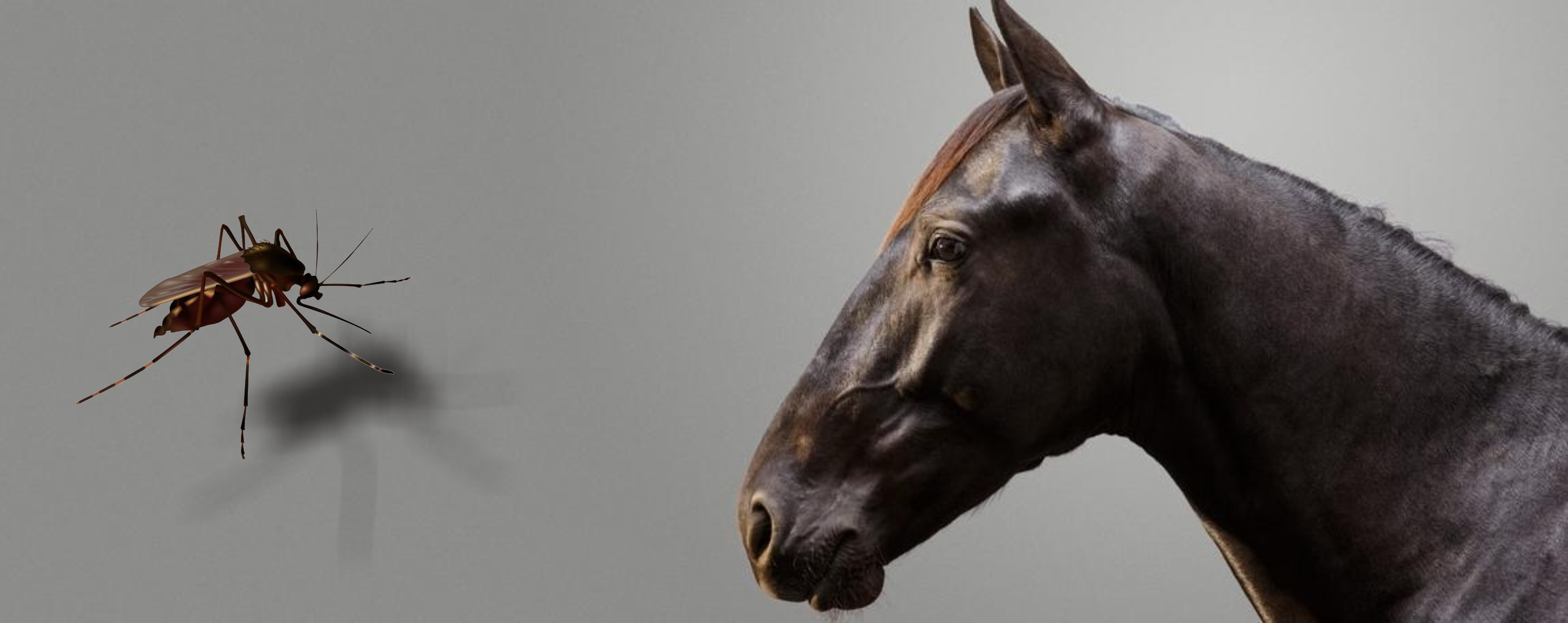
VIRUS WEST NILE – A threat that grows day by day
West Nile Virus (WNV) is a flavivirus transmitted by mosquitoes and is a disease of growing importance in Europe. The WNV can have devastating consequences, as evidenced by outbreaks in the USA and, recently, in Italy (2008) and other European countries. These WNV outbreaks were caused by a strain that originated in Europe.
WNV transmission
WNV is transmitted through the bite of a female mosquito. In Europe, the main vectors are mosquitoes of the Culex genus, which are widely distributed throughout the continent. Transported from Africa to Europe by migratory birds, the WNV's transmission cycle in Europe is maintained by birds (Passerines).
Clinical symptoms in horses
The incubation period for WNV in horses ranges from 3 to 15 days. Apart from showing fever, loss of appetite and depression, the clinical symptoms of WNV in horses are almost exclusively neurological: hindquarter weakness ranging from incoordination to paralysis, vision problems, ataxia, head banging against objects, wandering, seizures, dysphagia, walking in circles, hyper-excitability and coma.
10% of the horses infected by WNV develop a nervous condition associated with encephalitis.
Mortality in horses with clinical symptoms ranges from 20% to 57%.
A definitive diagnosis (based on blood or spinal fluid samples) is necessary to rule out other diseases with similar symptoms, such as rabies, botulism, equine myeloencephalitis and other forms of encephalitis.
A threat for European horses
Factors that increase the WNV threat to horses in Europe:
- Climate change is leading to hotter and more humid weather. These conditions increase the disease transmission potential because they lead to an increase in the number and distribution of vector mosquitoes and accelerate virus maturation within this vector.
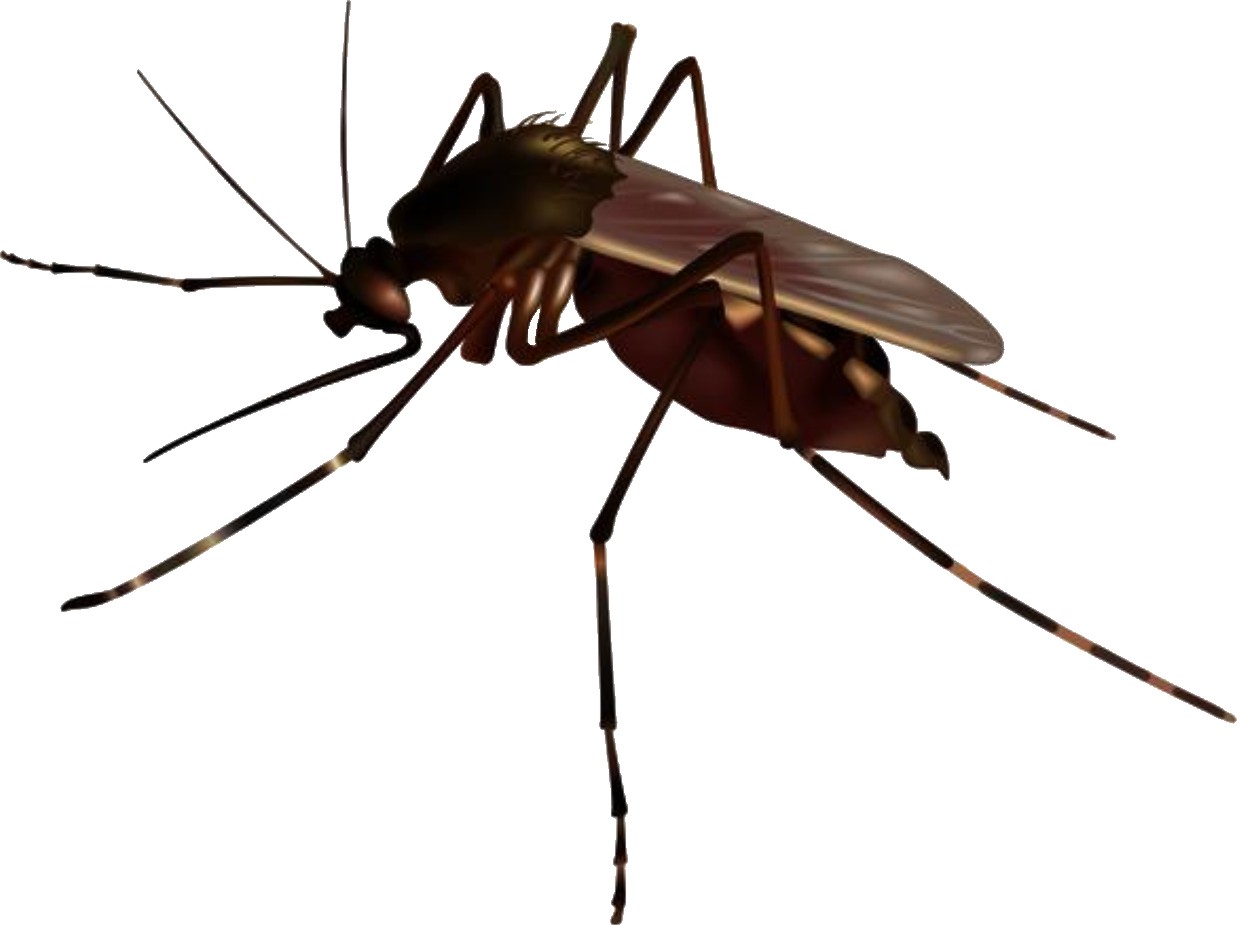
- Increase in the population of hybrid Culex mosquitoes that bite birds as well as other animals and are capable of surviving the winter.
- Activities developed by humans that create suitable breeding environments for mosquitoes, such as places with piled-up old tires, etc.
- Transport of mosquitoes in airplanes.
- Presence of new virus strains in Europe.
We must add the horses that are exposed to travel to endemic areas of WNV, such as the USA and some European countries, including Spain, where outbreaks have recently emerged.
PROTEQ WEST NILE
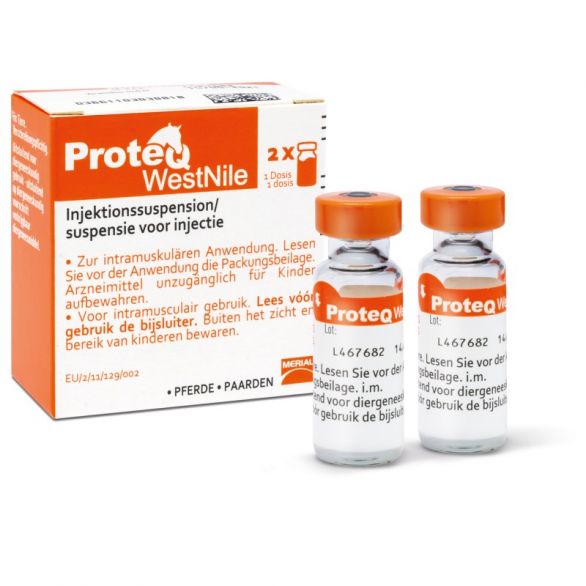
Proteq West Nile is the vaccine of choice for the protection of horses against the growing threat of WNV in Europe.
- The only way to protect your horse against WNV disease is vaccination.
- Proteq WNV provides maximum security and efficacy against the 2 WNV lineages.
- Proteq WNV can be used in pregnant and lactating mares.
- To ensure adequate protection for your horse during the period of maximum risk of infection (June - October), vaccination should be carried out in the spring.
- In foals, vaccination should begin at 5 months of age.
- In foals and animals not previously vaccinated, the protocol consists of a primary vaccination with 2 doses spaced between 4 - 6 weeks, followed by an annual booster.
- In horses previously vaccinated against WNV, the use of Proteq WNV confers increased immunity.
- Maximum protection is reached 2 weeks after the primary vaccination.
